Local Guides
A Guide to Taghazout Bay Surf Spots
North of Agadir, the coastline around Taghazout Bay gathers headlands, reefs and sandy beaches into a short stretch of coast. Each spot behaves differently depending on swell, tide and wind, which is why local knowledge matters. Here is a general introduction.
4 min read
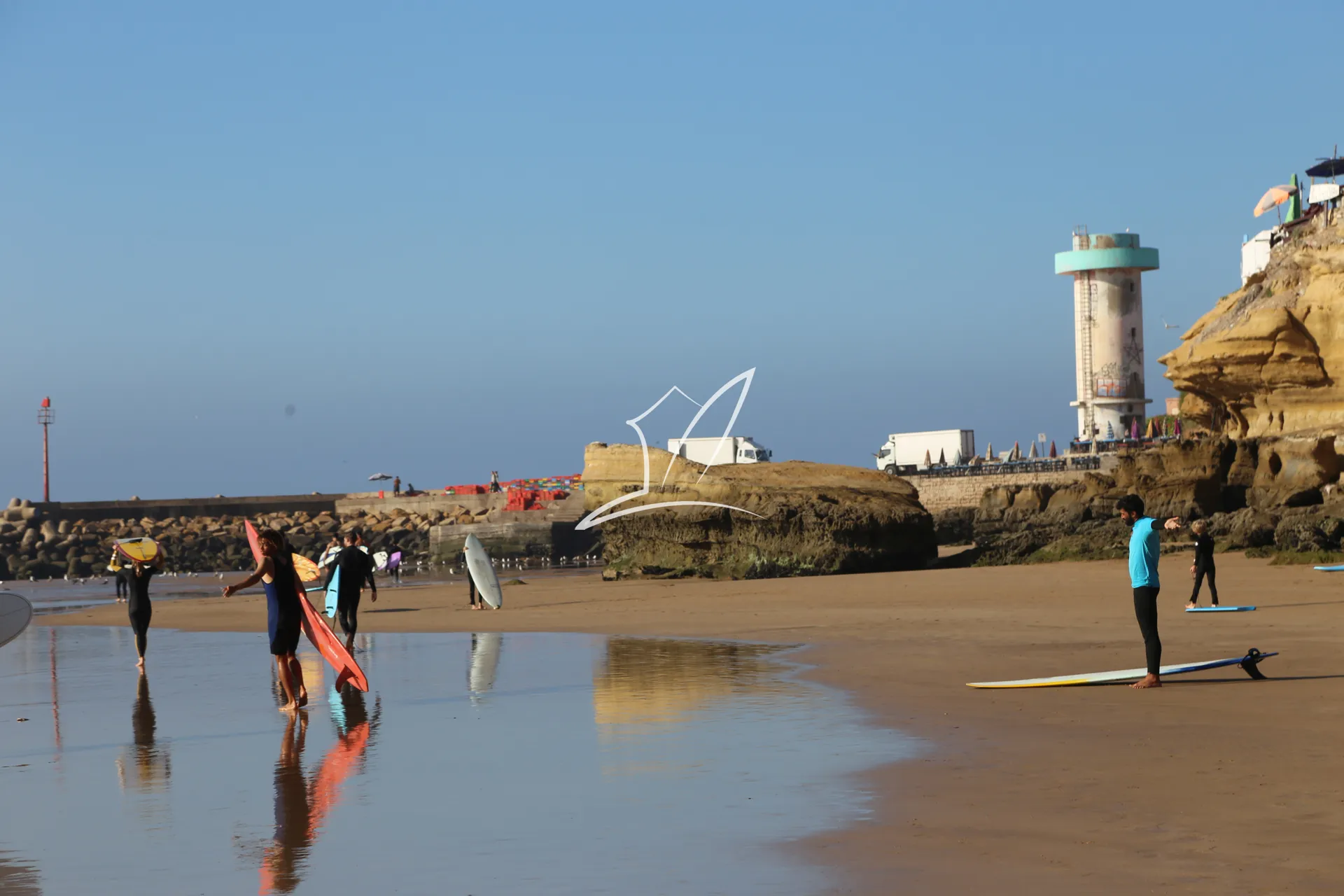
Reading the coastline
The coast here runs roughly north to south, with rocky headlands pushing into the Atlantic. Where swell wraps around a headland it can create point breaks: waves that peel along the rock in one direction, which can mean long rides.
Many of the best-known breaks in this area are right-handers, meaning the wave breaks to the surfer’s right as they ride it. Between the points there are beaches and reefs, each with its own character.
Because the spots sit so close together, a session can change completely with a small move along the coast. One beach may be crowded and choppy while the next, a few minutes away, is clean and quiet. Surfers often decide where to go on the morning itself, after looking at the water.
Spots surfers often mention
- Anchor Point: a well-known right-hand point break that works best with a decent swell. It is generally considered a spot for experienced surfers.
- Killer Point: another right-hand point break that can be powerful. It is typically described as demanding.
- Hash Point: a right-hand point break near Taghazout village that is popular and can get busy.
- Panoramas: a right-hander that surfers often describe as a friendlier step up from the beach.
- Banana Beach: a sandy beach area popular with beginners and learners in smaller conditions.
- Imsouane: further up the coast, known for a very long right-hand wave that suits longboards and patient intermediate surfers.
Where beginners tend to start
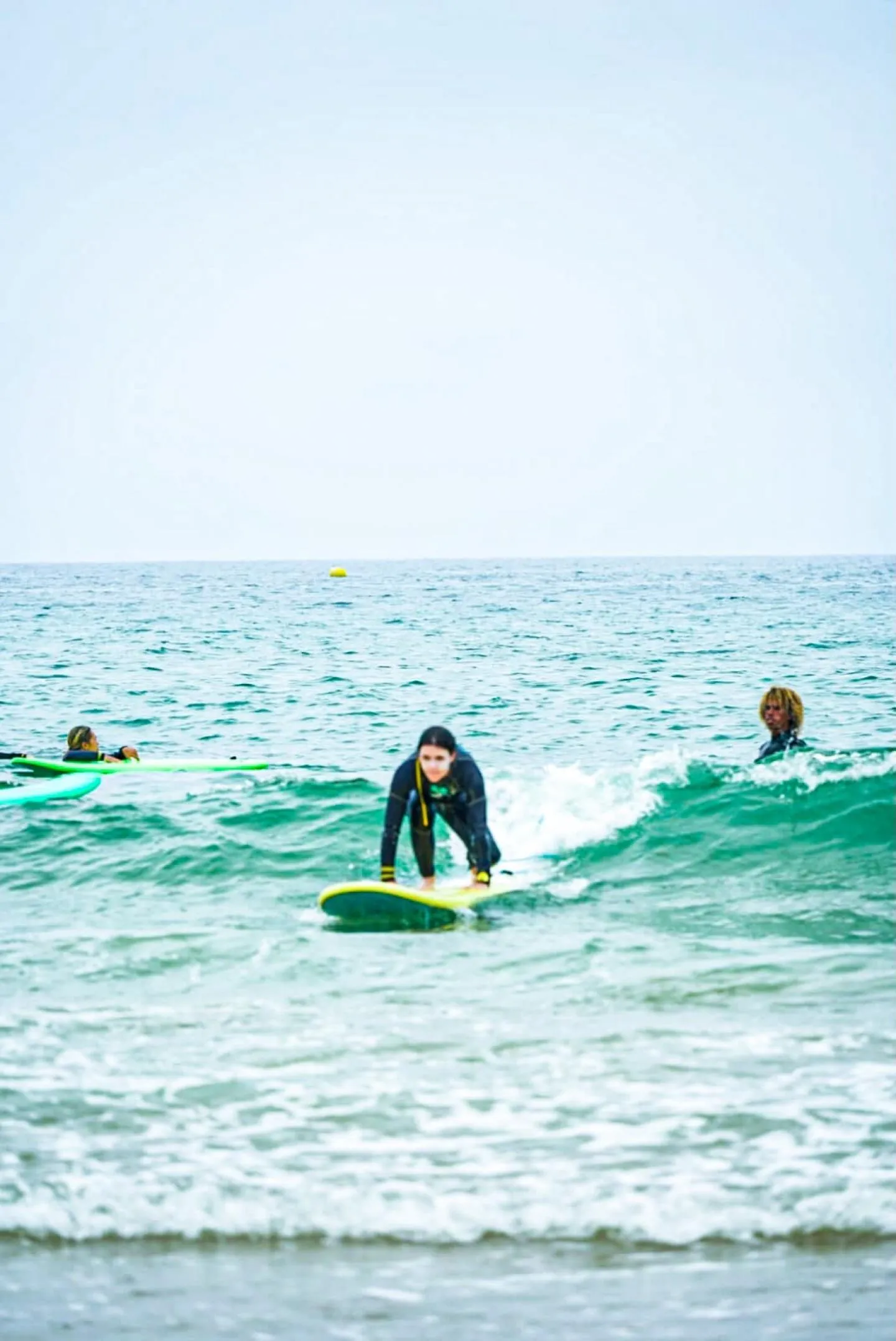
Most learners begin on sandy beaches with gentle whitewater. A sandy bottom is more forgiving than rock, and waves that break softly give you time to practise your pop-up. Many beginners learn with an instructor who chooses the beach that suits the day’s swell and tide.
As confidence builds, you can start to move from whitewater to unbroken waves on mellow beach breaks and, later, to easier points with the right guidance.
It is also worth planning for the days when the swell is small. Smaller days are often the best days for learning, because the water is calmer and you can concentrate on technique instead of simply getting out the back.
Stepping up to points and reefs
Points and reefs are more demanding than beaches. The waves can break over rock, the take-off zone is often crowded, and paddling out can involve currents and rocks. Hold priority carefully, know your limits and be ready to sit one out if the conditions are beyond you.
Many surfers wear booties and keep their board close at rocky spots. Take your time, watch other surfers first and learn where they paddle out and where they exit.
Tide, wind and swell
Every spot works differently across the tide. Some are better at mid or high tide, others at low. Wind direction matters too: a light offshore wind smooths the waves, while onshore wind makes the water choppy.
Early mornings are often calmer, and they are a popular time for surfers who want a quieter lineup. Forecasts help you plan, but your eyes and a local’s advice give the best picture of the day.
If you are travelling for a week or more, give yourself time to see the same spot at different tides. You will quickly learn how the waves change and which spots suit your level on which days.
Respect the lineup
This stretch of coast is home to local surfers and to many visitors. Be patient, wait your turn and keep your distance from surfers who are more advanced than you. Take your rubbish with you and treat the beaches and the water with care.
Final thoughts
The beauty of Taghazout Bay is that it offers many kinds of waves in a small area. Whether you are paddling out for the first time or chasing a long right-hander, take your time, learn the place and let local knowledge guide you.
Sources and further reading
General reference sites; conditions, rules and prices change, so check the latest information before you travel.
KEEP READING
Related stories.
Surf
A Beginner’s Guide to Surfing in Morocco
Long Atlantic beaches, a welcoming surf scene and plenty of room to learn: what to expect, what to practise first and how to make your first surf trip count.
5 min read
Morocco
When Is the Best Time to Surf in Morocco?
There is no single answer. Swell, wind, water temperature and your own experience all shape the best time to surf the Moroccan Atlantic coast.
4 min read
Local Guides
Things to Do Around Taghazout When You’re Not Surfing
Flat days, rest days and curious days: ideas for exploring the coast, the mountains and the markets beyond the waves.
3 min read
READY WHEN YOU ARE
Ready to spend more timein the water?
Explore the surf packages or take a look around the riad.