Surf
A Beginner’s Guide to Surfing in Morocco
Morocco’s Atlantic coast has long been a place where people take their first waves. If you have never stood up on a board, this guide covers what to learn first, what to bring to the water and how to get the most from your first surf trip.
5 min read
Why Morocco works for a first surf trip
Morocco faces the Atlantic, and its coastline mixes sandy beaches, rocky points and reef breaks. For a beginner, the sandy beaches matter most: they give you space to fall, to try again and to learn without rock underfoot.
Parts of the coast, especially around Taghazout, Tamraght and Imsouane, have grown a surf scene built around lessons and board rental. That means it is usually easy to find instruction, a soft board and other people who are also finding their feet.
Conditions change with the season and the swell, so no single week is the same as the next. That is part of surfing, and a good reason to learn with someone who reads the ocean every day.
Learn the basics before you paddle out
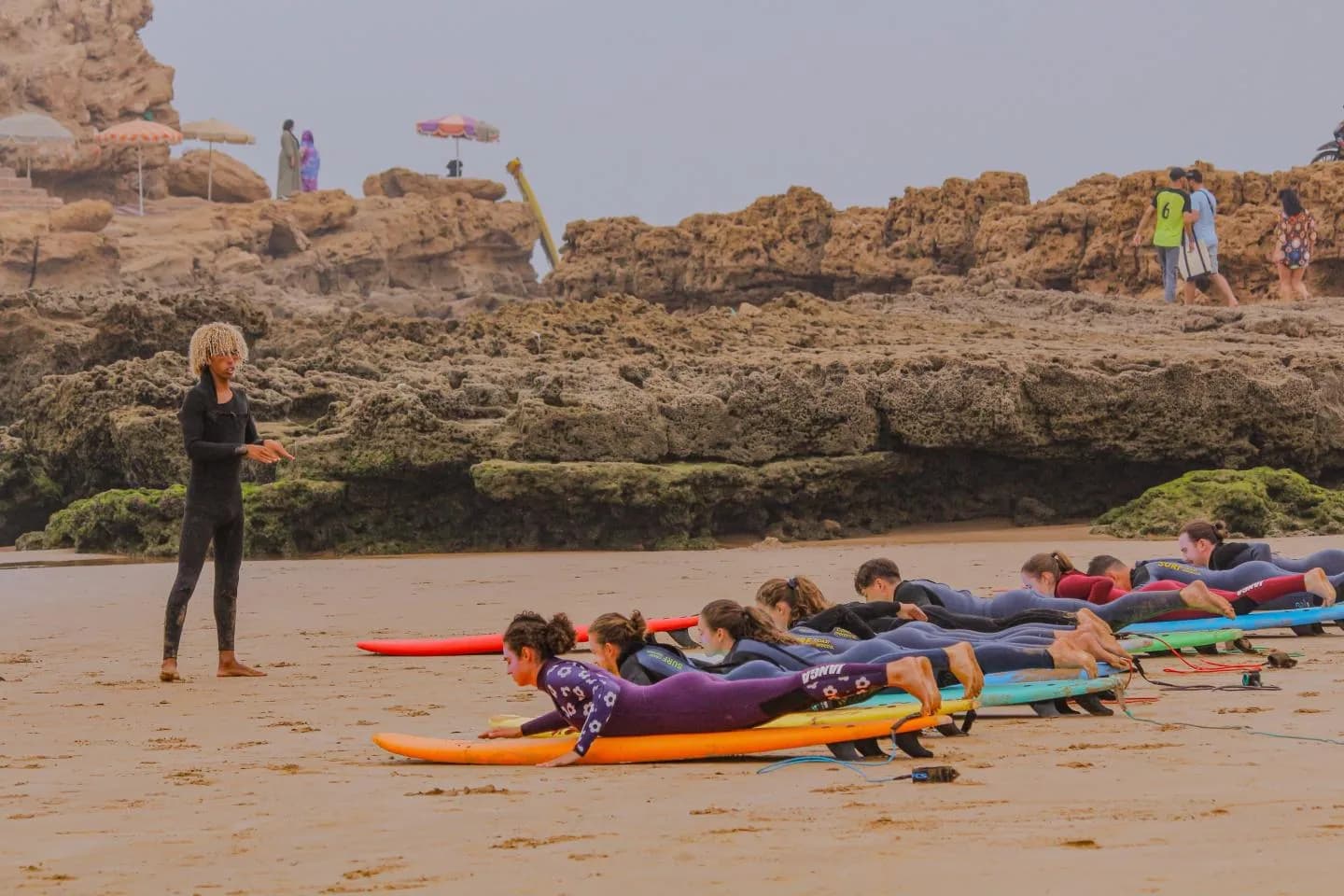
The best first lesson often happens on the sand. Lying on a board on the beach, you can practise how to paddle, where to place your chest on the board and how to pop up to your feet in one smooth movement.
Beginners usually start in whitewater, the foamy part of a wave that has already broken. It pushes you towards the shore, which makes it a safer place to learn balance and timing than the green, unbroken wave beyond it.
Expect to fall. Falling is part of the process, and learning to do it safely, away from your board and with your arms protecting your head, is one of the most useful skills you will pick up.
Five skills worth practising on the sand
- Paddling with long, relaxed strokes while keeping your head up.
- The pop-up: hands under your chest, push up and bring both feet under you.
- A balanced stance, knees bent and eyes looking where you want to go.
- Falling safely, away from the board and with your arms covering your head.
- Spotting the waves, the channels and the places where the water is pulling out to sea.
Choosing a board and wetsuit
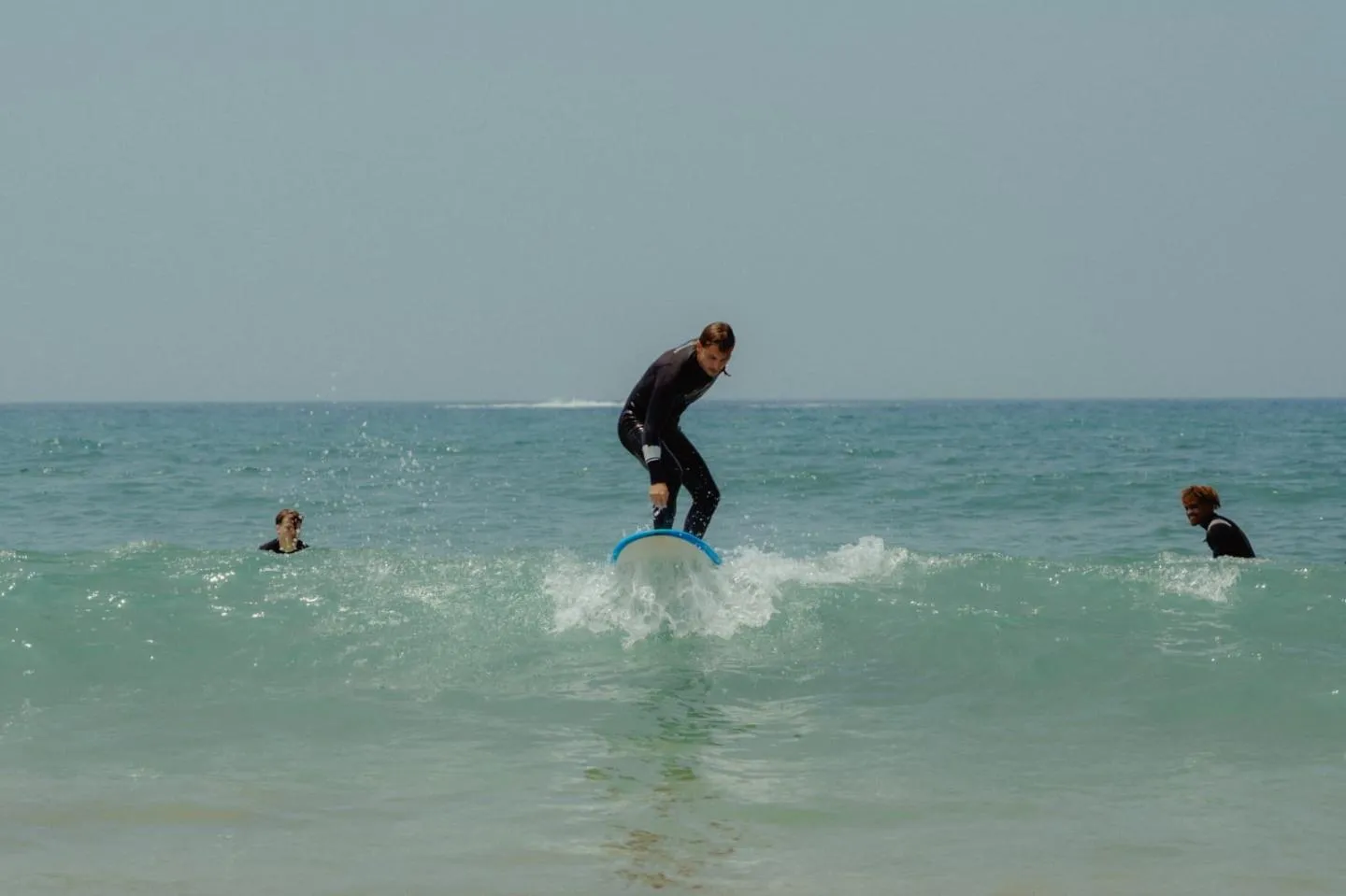
Almost every beginner starts on a soft-top foam board. It is wide, buoyant and forgiving, and it is much kinder to you and to everyone else in the water if it hits someone. Longer boards generally paddle more easily and catch waves earlier, which means more rides and faster progress.
The Atlantic is cooler than many visitors expect, so most surfers wear a wetsuit for much of the year. How thick it needs to be depends on the season and on how easily you feel the cold. A well-fitting wetsuit also protects your skin from the board, so a snug fit is worth more than a thick one.
If you are unsure what to buy, do not buy anything yet. Rent equipment for your first trip and use the time to learn what you like.
Reading the water
Before you paddle out, watch the water for a few minutes. Notice where the waves break, how often they arrive and where the foam is pushed back to sea. Water that flows steadily away from the beach is often a rip current, and it is worth knowing how to spot one.
If you are ever caught in a rip, stay calm and do not try to swim straight back against it. Float, signal for help if you need it and swim across the current, parallel to the beach, until you are out of it.
Wind, tide and swell size all change how a beach behaves. Mornings are often calmer, and many surfers plan their sessions around the tide. Local instructors and lifeguards are the best source for how a particular beach is behaving that day.
Every surfer starts the same way: swallowing a little seawater and laughing about it.
Surf etiquette in plain language
Surfing has a few simple, unwritten rules that keep the water safe and friendly. The surfer closest to the breaking part of the wave has priority, and you should never drop in on someone who is already riding it.
Hold on to your board and do not let it become a projectile. Look around before you paddle, call out if you are about to cross someone’s path and apologise if you get it wrong. Respect local surfers, share the waves and stay out of the way of advanced surfers at the more demanding breaks.
Looking after your body
Surfing uses your shoulders, back and legs in ways everyday life does not. A little stretching before and after a session helps, and so does drinking plenty of water. The Moroccan sun can be strong even on cool days, so wear sun protection and reapply it.
Do not underestimate rest. Most people feel their best on the second or third day of a trip, and sore shoulders on day four are normal. Listen to your body and take a break when you need one.
What your first surf trip might feel like
Progress is personal. Some people stand up in their first session, others need a few days, and neither is a problem. You will probably spend your first sessions in whitewater, learning to paddle, catch a wave and stand. As your balance improves you can start to work towards unbroken waves and smoother rides.
Every surf school and every week is different, so ask about group sizes, equipment and how sessions are planned for your level before you book.
Final thoughts
Learning to surf in Morocco is as much about the place as the waves: long beaches, bright light and slow evenings after the water. Start with a lesson, choose a forgiving board and let your first trip be about enjoying the ocean. The standing up will come.
KEEP READING
Related stories.
Morocco
When Is the Best Time to Surf in Morocco?
There is no single answer. Swell, wind, water temperature and your own experience all shape the best time to surf the Moroccan Atlantic coast.
4 min read
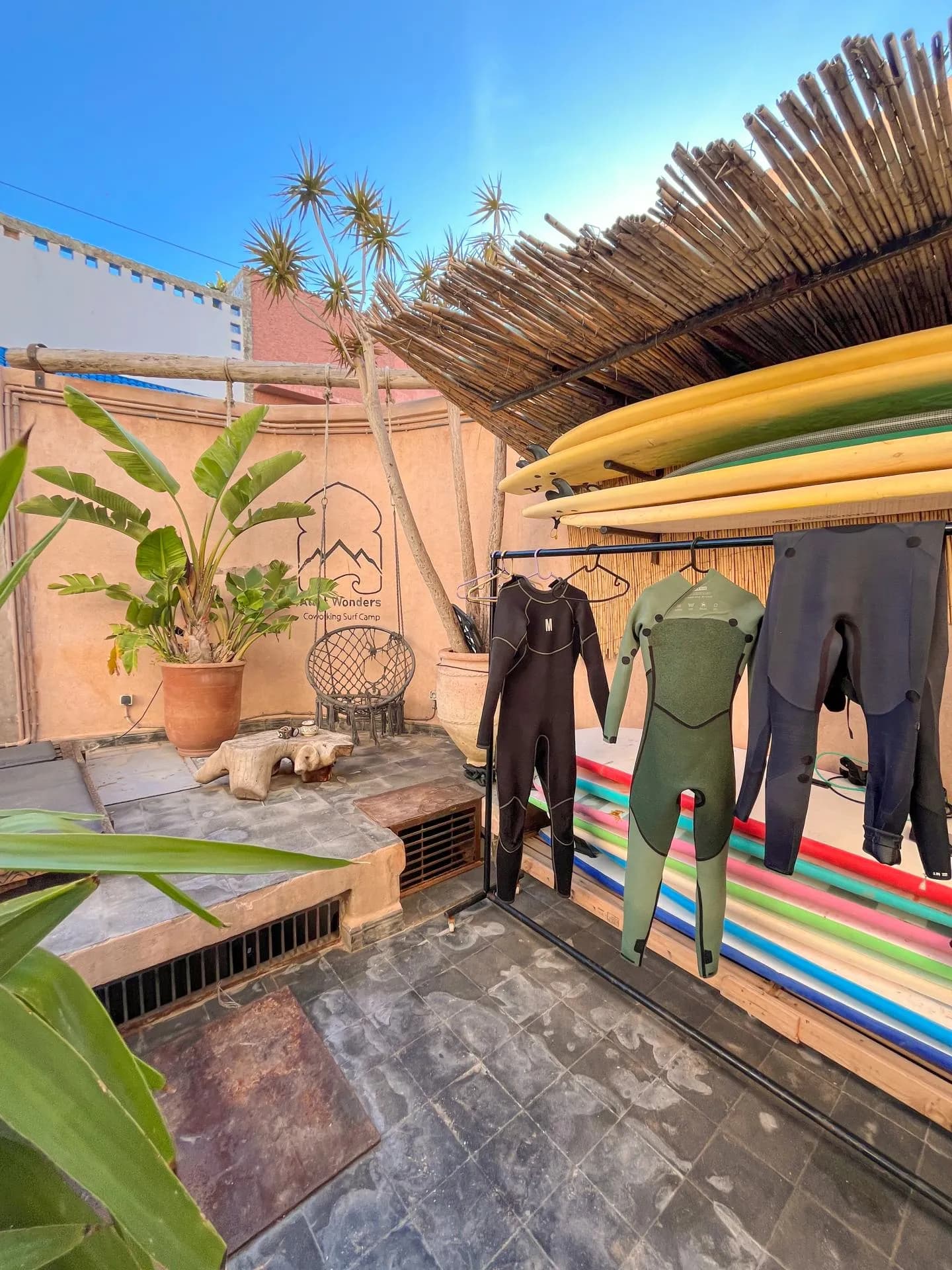
Travel
What to Pack for a Surf Trip to Morocco
From sun protection to modest clothing for town days, here is a practical checklist for a surf trip on Morocco’s Atlantic coast.
3 min read
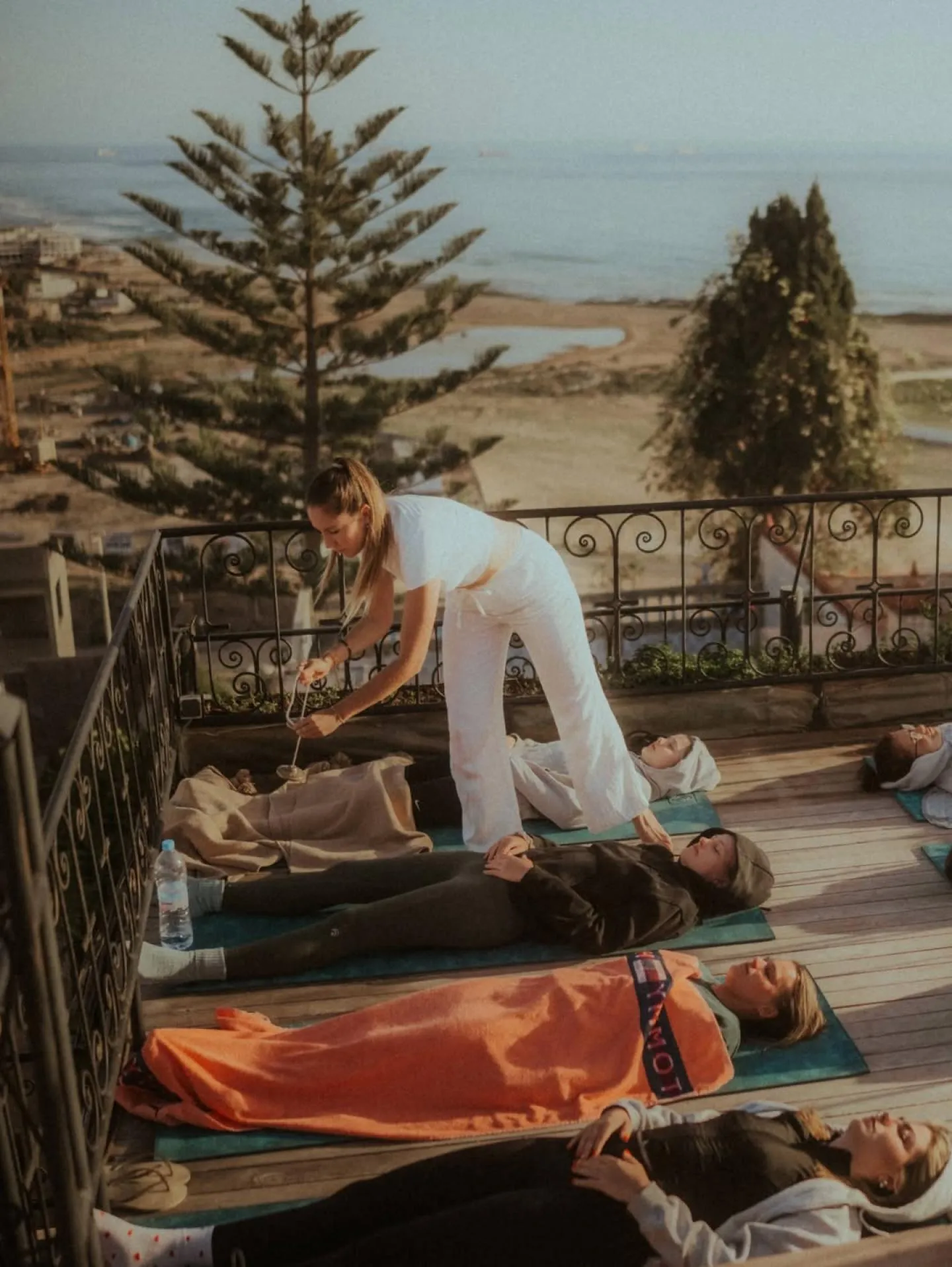
Wellness
Surf & Yoga: Why the Combination Works So Well
Surfing asks a lot of your shoulders, hips and breath. Yoga trains the same things in a gentler way. Here is why the two pair so naturally.
3 min read
READY WHEN YOU ARE
Ready to spend more timein the water?
Explore the surf packages or take a look around the riad.